

The direct answer
There is no universal right number. The honest answer is that your Google Ads budget should be large enough to gather conversion data and small enough that a slow first month will not hurt the business. You set it by working backwards from your goals, not by picking a round figure.
Two questions decide it: how many leads or sales do you need, and what is each one worth to you. Once you know those, the budget falls out of the maths. This guide shows how to do that calculation and where small budgets usually go wrong. To pressure-test a figure quickly, our budget estimator does the arithmetic for you.
Start with the maths, not a round number
Work from the outcome you want back to the spend.
Say you want 20 leads a month, and from past experience one in four enquiries becomes a customer. If your average cost per lead in your industry sits around a certain figure, your monthly budget is simply 20 multiplied by that cost per lead. Those numbers are yours to fill in, but the method is the same for every business.
If you do not yet know your cost per lead, treat the first month as a paid test. The goal is not profit; it is data. You want enough conversions for Google’s bidding to learn what a good customer looks like. Until the campaign has that, early results tell you very little.
What actually moves your budget
A few factors push the number up or down more than anything else.
Your goal sets the floor. Lead generation in a low-competition niche costs far less than selling a high-ticket product in a crowded auction.
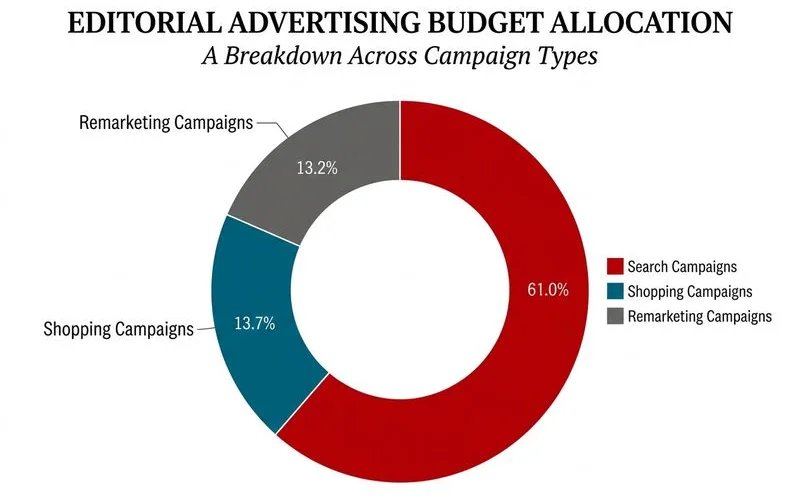
Ad format matters. Search ads chasing high-intent keywords usually cost more per click but convert better. Display and video cost less per click and suit awareness rather than immediate sales.
Audience and competition decide your cost per click. The more advertisers bidding on your keywords, the more each click costs. A specialised service in a smaller market is cheaper to reach than a broad consumer category.
Geography and timing change the total. Targeting all of Malaysia costs more than a single city radius. Running ads only during your business hours stretches the same budget further.
How to set a sensible starting point
Pick a budget that can realistically produce enough conversions to exit the learning phase within a month or two. If your numbers suggest that figure is out of reach, narrow the campaign rather than starving it: fewer keywords, a tighter location, one clear offer. A small budget spent deep on a narrow target beats the same budget spread thin across everything.
Give the campaign time before you judge it. New campaigns run high while the system calibrates, then settle. Our guide on how long until Google Ads is profitable covers what to expect week by week.
Common budgeting mistakes
Most wasted spend traces back to the same handful of errors:
- Spreading a small budget across too many keywords or campaigns, so none gathers enough data to learn.
- Pausing too early, before the campaign has had a fair chance to stabilise.
- Running without proper conversion tracking, which leaves you guessing what works.
- Bidding on broad keywords on a tight budget, which burns money on clicks that never convert.
Bringing it together
Size your budget from your goals and your cost per lead, fund it well enough to gather data, and protect it with tight targeting and clean tracking. The number that works is the one your own figures produce, not a round amount you saw quoted elsewhere.
Run your figures through the budget estimator, or talk to ADE Marketing if you want help setting and managing the Google Ads budget for your business.