
The direct answer
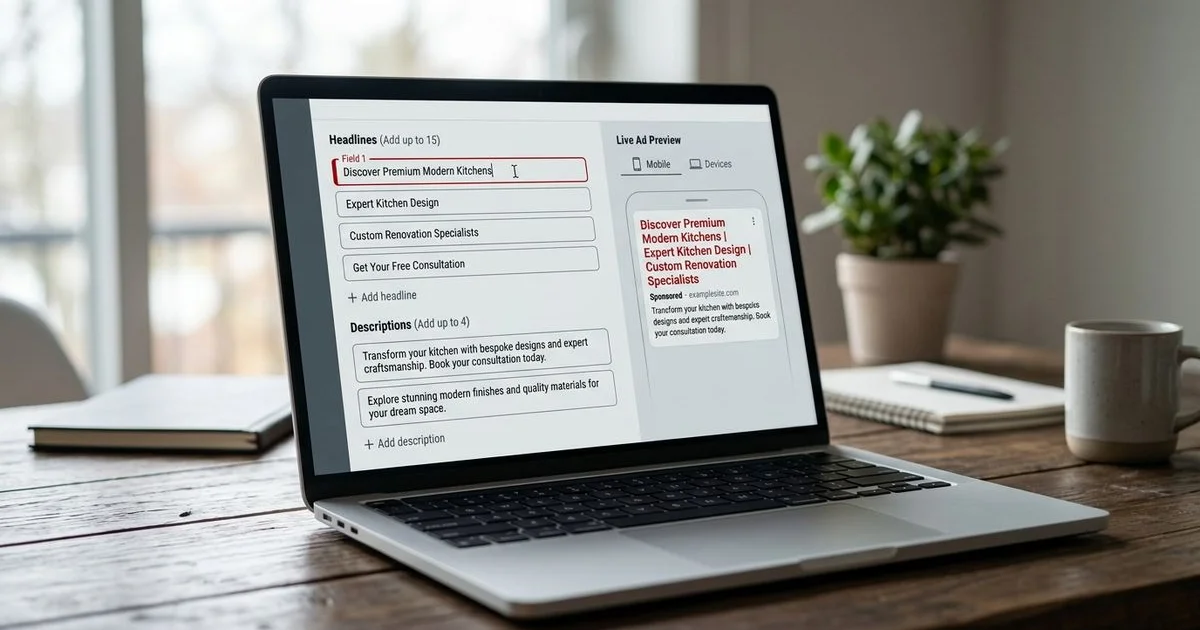
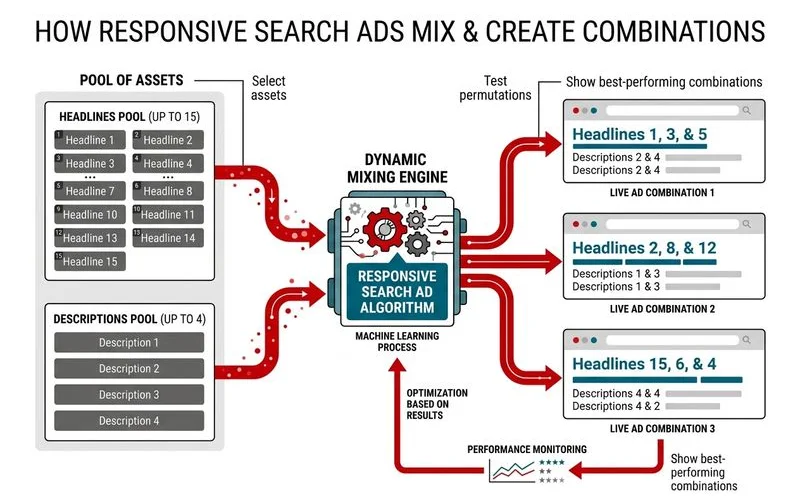
A responsive search ad, or RSA, is the standard text ad format in Google Ads. Instead of writing one fixed ad, you supply up to 15 headlines and up to 4 descriptions. Google then mixes and matches them, showing up to 3 headlines and 2 descriptions at a time, and learns which combinations work best for each search.
The idea is simple: give Google more raw material and let its system tailor the ad to the person searching. This guide explains how that works and how to write assets that actually perform.
How responsive search ads work
You write the parts; Google assembles the whole. Each headline can be up to 30 characters and each description up to 90. From the assets you provide, the system builds different versions of the ad and serves the combination most likely to earn a click for a given query.
You can pin an asset to a fixed position if a particular headline or description must always appear, for example a brand name or a required disclaimer. Pinning is useful but limits how many combinations Google can test, so use it only when you have to.
As you build the ad, Google shows an ad strength rating from poor to excellent. It reflects how many distinct, relevant assets you have supplied. It is guidance rather than a ranking signal, but a stronger rating usually means a better-equipped ad.
Why use them
Responsive search ads earn their place for a few reasons.
They cover more searches. Because Google can tailor the combination to each query, one RSA can match a wider range of searches than a single fixed ad.
They stay relevant. The system leans toward the assets that perform for each search, so the ad a user sees tends to fit their intent.
They reduce manual testing. Rather than building and comparing many separate ads, you give Google a pool of assets and let it run the testing continuously.
How to set one up
You create a responsive search ad inside a search campaign’s ad group. Add your headlines and descriptions, point the ad at a relevant landing page, and include your main keyword in some of the headlines so the ad matches what people searched. Keep an eye on ad strength as you go, and aim for good or better before publishing.
Tips for strong responsive search ads
A few habits separate RSAs that perform from ones that drift:
- Make every headline distinct. Repeating the same idea across slots gives Google nothing to test.
- Put your main keyword in two or three headlines so the ad echoes the search.
- Cover different angles: benefits, offers, features, and a clear call to action.
- Fill as many of the 15 headlines and 4 descriptions as you reasonably can, so the system has room to optimise.
- Pin only when something must appear, and review performance regularly rather than setting and forgetting.
Better assets also support a higher Quality Score, which lowers what you pay for the same position.
Bringing it together
Responsive search ads work by giving Google a range of headlines and descriptions and letting its system serve the best fit for each search. Your job is to supply distinct, relevant, keyword-aware assets and to pin sparingly so the format can do what it is built for.
Responsive search ads are the ad format inside search campaigns, one of several types of Google Ads campaigns. If you would rather have your ads written, structured, and managed for results, see how we handle Google Ads management.