

The direct answer
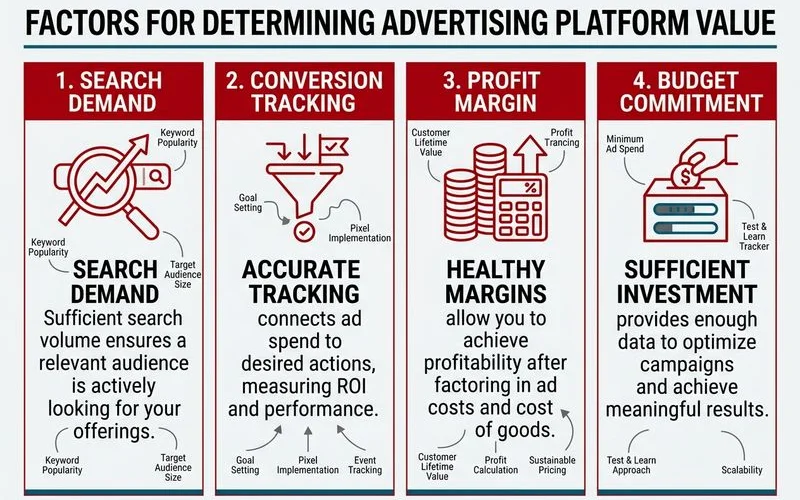
Google Ads is worth it when three things are true: people already search Google for what you sell, you can track which clicks turn into customers, and you have enough margin to fund the first month or two while the campaign learns. When all three hold, paid search is one of the fastest ways to buy qualified attention.
It is not worth it when almost no one searches for your category, when you cannot measure conversions, or when the budget is too small to gather data. In those cases you will spend money without ever knowing whether it worked. This guide walks through the upside, the real costs, and a short test to tell which side you fall on.
Where Google Ads earns its keep
Stripped of the hype, a few advantages do the heavy lifting.
You reach people at the moment of intent. Someone searching “aircon repair near me” wants the service now. Few channels let you appear exactly when demand is that explicit.
You target precisely. You can choose keywords, locations, devices, times of day, and audiences, then spend only where it pays. A local business can avoid paying for clicks from the other side of the country.
You can measure almost everything. With conversion tracking in place, you know what each lead costs and which keywords produce them. That makes the spend accountable in a way most advertising is not.
It is fast. Where SEO compounds over months, ads can drive qualified traffic the day they go live. That speed makes Google Ads useful for launches, seasonal pushes, and testing demand.
It scales with what works. Once a campaign is profitable, you can add budget to the winners and pull it from the rest. The good results are repeatable rather than lucky.
The downsides to weigh
Paid search has real costs beyond the click.
Competition pushes prices up. Popular keywords get more expensive as more advertisers bid, which squeezes margins in crowded categories.
Without management, money leaks. Broad keywords, missing negative keywords, and weak landing pages quietly waste budget. Ads reward attention; left alone, they drift.
It needs ongoing work. This is not a set-and-forget channel. Search terms, bids, and creative need regular review to stay efficient.
It stops when you stop. The moment you pause the budget, the traffic ends. Unlike SEO, you are renting visibility, not building it.
Is it right for your business?
Run through four questions:
- Do people search Google for what you offer? Check with keyword research before committing.
- Is each customer worth enough to justify a paid click? Higher margins absorb higher costs.
- Can you track conversions, from click to enquiry to sale?
- Can you commit to at least two to three months so the campaign can stabilise?
Four yeses means Google Ads is very likely worth it. A no on demand or tracking is a sign to fix that first.
Google Ads or the alternatives
Worth it does not mean instead of everything else. Paid search pairs naturally with SEO: ads bring leads now while organic builds cheaper traffic for later. Our comparison of SEO versus Google Ads covers when to lean on each, and if you are weighing organic too, is SEO worth it asks the same question of search engine optimisation.
Bringing it together
For most Malaysian businesses with real search demand and the ability to track results, Google Ads is worth it, provided it is set up and managed properly. The channel rewards measurement and discipline and punishes neglect.
See how we run Google Ads management, or talk to ADE Marketing if you want a campaign built to prove its return before you scale it.