

The direct answer
SEO is worth it for a small business when two things are true: people search Google for what you offer, and you can commit at least six months before judging the results. When both hold, organic search becomes a source of qualified traffic you do not pay for click by click, and that advantage compounds.
It is the wrong call when you need leads this week and nothing sooner, when no one searches for your category, or when you cannot commit the time and content it takes to rank. In those cases, paid channels fit better, at least to start. This guide covers the real payoff, how to measure it, and how to tell whether your SEO is actually working.
What SEO actually is
SEO is the work of making your site the result Google trusts enough to show for searches that matter to your business. That means content that answers real questions, a site that loads fast and works on mobile, and signals from other sites that you are credible. Done well, it earns a steady stream of visitors who were already looking for what you sell.
Why it pays off for small businesses
A few benefits matter more than the rest.
It brings qualified traffic. Someone who finds you by searching for your service is closer to buying than someone who saw an ad they were not looking for. Intent is built into the visit.
It turns into leads and sales. Ranking for the terms your customers use puts you in front of them at the deciding moment, which is where enquiries come from.
It builds visibility and trust. Appearing high in organic results, year after year, signals to buyers that you are an established option rather than a passing advertiser.
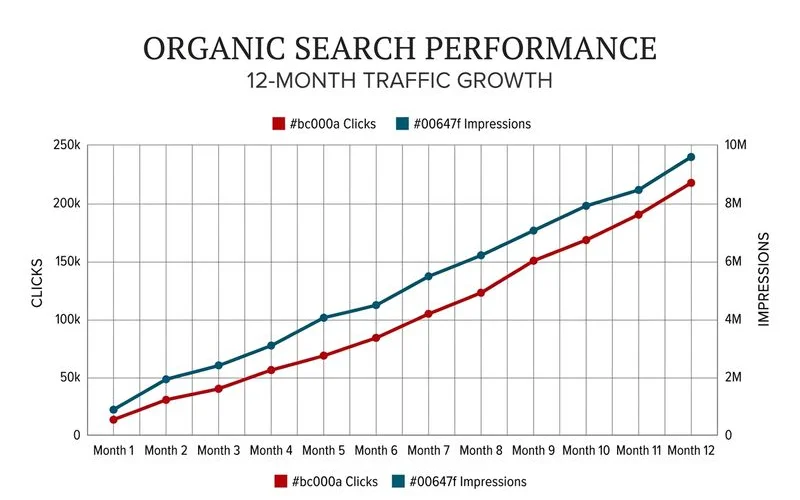
It gets cheaper over time. Paid clicks cost the same on day 500 as on day one. Organic rankings, once earned, keep delivering traffic without a per-click fee, so the cost per visitor falls as the work matures.
How to tell if your SEO is working
You do not have to guess. A handful of signals tell the story:
- Search rankings: are you climbing for the terms that bring real customers, not just any keyword.
- Organic traffic in Google Analytics: is the trend up over months, not days.
- Leads and sales attributed to organic visits: the metric that actually pays the bills.
- Return on investment: compare what SEO costs against the value of the customers it brings.
- Ask customers how they found you. The simplest check, and often the most honest.
If rankings and organic traffic are rising but leads are flat, the gap is usually on the page: the content ranks but does not convince. If nothing moves at all after a fair stretch, the strategy needs work.
What to do if it is not working
When SEO stalls, the fixes are usually in this order:
- Redo your keyword research so you are targeting terms people actually search and can realistically rank for.
- Make sure the site is technically sound: fast, mobile-friendly, and easy for Google to crawl.
- Write content that genuinely helps the reader rather than padding for word count.
- Get your best content in front of more people and earn links from credible sites.
- Track rankings and traffic over time and adjust based on what the data shows.
Our guide on how long SEO takes sets realistic expectations before you decide a campaign has failed.
SEO or paying for clicks
Worth it does not have to be a choice between channels. SEO and Google Ads complement each other: ads bring leads now, SEO builds traffic that costs less later. If you are weighing the paid side too, is Google Ads worth it runs the same test for paid search. And if you are worried that AI answers have changed the game, SEO in the AI search era covers what still works.
Bringing it together
For most Malaysian small businesses whose customers search online, SEO is worth it, as long as you treat it as a six to twelve month investment rather than a quick fix. The traffic it earns is qualified, durable, and cheaper over time.
See how we approach SEO services, or talk to ADE Marketing about whether your market has the search demand to make it pay.